Editors’ Note: Our website features a healthspan-focused job board, an archive of past newsletters, a growing dictionary of terms we’ve highlighted in previous editions and more to come!
Visit us at: https://stacked-health.com/
Or copy and paste this link to others: {{rp_refer_url}}
📣 Presented by Pique 📣
|
In partnership with 
|
Your Fall Glow-Up: Two Drinks for Hydrated, Plump-Looking Skin |
|
|
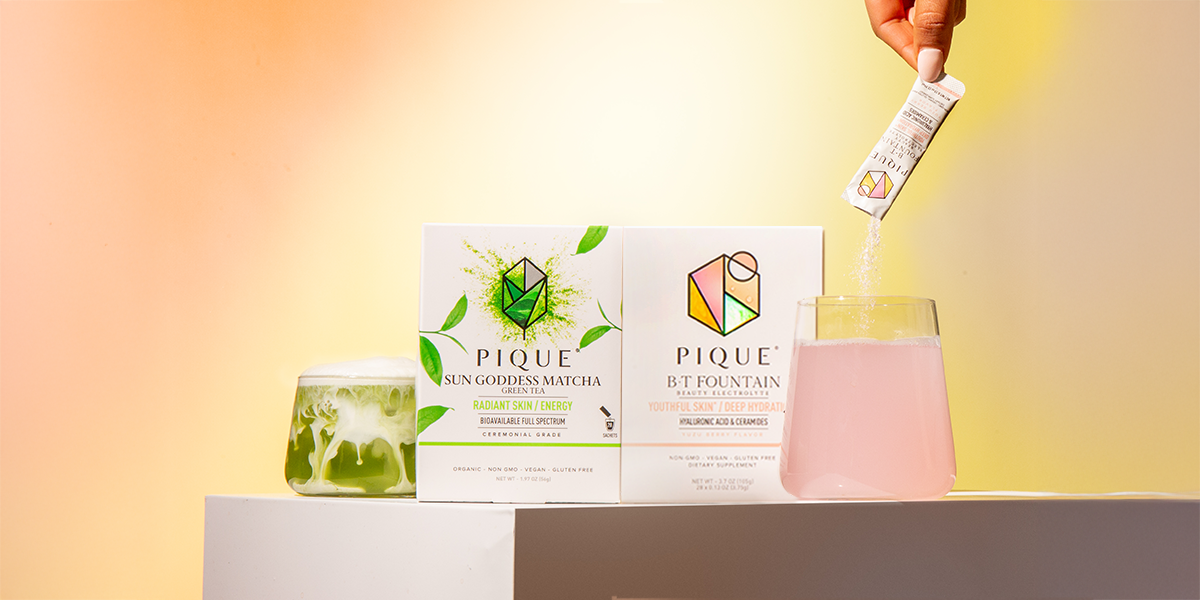
Cooler weather can leave skin looking dull and feeling dry. Pique’s Radiant Skin Duo brings a beauty upgrade to your fall routine: two delicious daily drinks that support hydrated, plump, luminous-looking skin from within. |
|
Start with creamy, organic Sun Goddess Matcha, packed with antioxidants that support healthy-looking skin. Then sip B·T Fountain, a refreshing beauty electrolyte combining clinically studied ceramides, hyaluronic acid and electrolytes to support hydration and a dewy glow. |
|
The beauty benefits come with impressive clinical evidence. In a clinical trial of B·T Fountain’s ceramides, skin hydration improved 25% by day 15. By day 60, hydration improved 37%, elasticity improved 36% and wrinkle depth decreased 8.2%. |
|
Morning matcha. Afternoon beauty hydration. An easy ritual that fits into busy fall days while supporting skin that looks smoother and feels replenished. Your favorite daily drinks become a simple skincare habit worth keep |
| Claim Your 20% Savings |

💊 The First AI Prescriber
Since October 5th, an adult in Utah with acne can open an app, answer a few questions, take some photos of their face, and have a prescription sent to their pharmacy without a doctor ever looking at the case first. The subscription costs $4.99 a month.
The app is called Nolla Derm, made by a New York startup called Nolla Health, and it is the first AI system in the United States allowed to write a brand new prescription on its own.
Who gets to say yes
Every prescription you have ever received came with a decision attached. Someone looked at your situation and judged that a specific drug was right for you. In the US, states decide who is allowed to make that decision, and the answer has always been a licensed human: a doctor, a nurse practitioner, a physician assistant, and in some cases a pharmacist.
That rule is a big reason healthcare moves slowly. Telehealth made it easier to reach a prescriber, but it never removed the prescriber. A person still had to read your intake form, look at your photos, and click approve. For something like acne, that person is often a dermatologist, and getting in to see one can take a long time.
Nolla's pilot is the first time a state has let software make that call for a new patient.
What the app actually does
The process is simple. You fill out a questionnaire about your skin and health history, including family history, and upload photos of your face taken in different lighting. The AI maps your skin, decides how severe the acne is, and picks a treatment.
The important detail is what it is allowed to pick from. The app can only choose among a short list of topical prescriptions, meaning creams and gels you put on your skin, that physicians approved in advance. It cannot invent its own regimen. If it is not confident, or if a patient seems to need something stronger like an oral medication, the case gets handed to a licensed clinician. Patients check in weekly, and anyone who is not improving gets moved up to a human provider, who is available by telehealth around the clock.
The oversight also loosens in stages. For the first 100 patients, a physician approves every prescription before it reaches the pharmacy. For the next 500, the AI prescribes first and doctors review its decisions afterward, every day. After that, doctors check a sample of cases each week. Nolla sends the state a report every month on how many patients it has treated and what happened to them, and the pilot runs for one year.
How Utah made this legal
In 2024, Utah created an Office of Artificial Intelligence Policy with an unusual job. Companies with AI products that do not fit neatly under existing law can apply for a temporary, custom set of rules, lasting 1-3 years, in exchange for a detailed safety plan and regular reporting. Think of it as a supervised test track, where the state relaxes certain rules for one company so everyone can see what happens.
Nolla is not the first health company on that track. In January, a startup called Doctronic got approval to have its AI renew prescriptions for about 190 common drugs, including blood pressure, psychiatric, and birth control medications. Injectables, including GLP-1s like Ozempic and Zepbound, were deliberately left off the list. In its first 5 months, the AI recommended renewing about 72% of requests, and the doctors reviewing its work agreed with it 91% of the time.
That program was not frictionless. In April, Utah's medical licensing board asked the state to shut it down immediately, saying it had only learned about it after the system was already live. The state responded by setting up a joint working group with the board, and board members helped design Nolla's pilot from the start.
Why acne went first
If you were designing the safest possible first test for an AI prescriber, it would look a lot like acne.
Acne is visible, so photos capture most of what a doctor would look at in person. It is rarely an emergency, so a wrong first guess usually means a few weeks of a cream that does not work rather than a trip to the hospital. The treatments in scope are topical, which carry much lower risk than pills that affect your whole body. Results show up on your face within weeks, which gives the app, the patient, and the reviewing doctors a fast feedback loop. And demand is enormous, since acne is one of the most common skin conditions there is.
Put together, acne gives regulators a way to test the core idea, whether software can decide on treatment safely, while keeping the cost of a mistake low.
What could go wrong
Some skin conditions look like acne but are not, such as rosacea, and the right treatment for one can irritate the other. An app working from photos has to catch those lookalikes. Skin-reading AI also has a history of performing worse on darker skin tones when its training data skews toward lighter ones, which is exactly the kind of gap the monthly reports should surface.
There is also a quieter cost. When a prescription runs out, it forces you back in front of a clinician, and that visit is often where a doctor notices something else entirely. Software that handles routine care well could also remove some of those accidental check-ins. It is still unclear who is legally responsible when an autonomous system gets something wrong, the company, the supervising physicians, or someone else.
What comes next
Nolla has already said where it would like to go. The company is exploring birth control and sees potential in conditions like urinary tract infections and the flu.
They are conditions where diagnosis mostly comes down to a checklist of symptoms, sometimes paired with a simple test, and where the treatment options are well established. The category of medicine most exposed to software is highly verifiable. The conditions where a doctor has to weigh competing risks, interpret ambiguous findings, or manage several problems at once are much further away.
Other states are watching, and a year of Nolla's data will give them something concrete to look at.
Why you should care
For most of the history of medicine, the scarce resource has been the person allowed to say yes. Utah has started separating that permission from the person, one low-risk condition at a time. Doctronic handled the decisions doctors had already made. Nolla now handles a new one.
The useful way to think about this is that AI is not replacing your doctor so much as redrawing the line between medical judgment and routine paperwork. Every condition that moves across that line becomes cheaper, faster, and available at 2am for $4.99. For anyone managing a long-term health condition, the question worth asking is which parts of your own care already sit on the routine side of that line, and how long it will be before an app is allowed to handle them.
🔄 Read More
Stay Stacked,
The Stack
Follow us on X/Twitter: @StackedHealth_
Join our Discord
Or copy and paste this link to others: {{rp_refer_url}}
Current Referral Count: {{rp_num_referrals}}
What did you think of today's newsletter?
Disclaimer: This content is for informational purposes only and is not intended to substitute for professional medical advice, diagnosis, or treatment. We aim to provide useful, evidence-informed insights. Your health is personal, and decisions should be made based on what works best for you.